How should lyophilized peptides be stored?
| State | Guidance |
|---|---|
| Lyophilized, long-term | Below −15 °C; lower preferred (−50 °C or lower) |
| Lyophilized, short-term | Refrigerator, about 4 °C; many ship at room temperature |
| In solution | Not recommended long-term; aliquot and keep frozen below −15 °C; frozen solutions "a few weeks" |
| Less stable residues | Asn, Gln, Cys, Met, Trp: limited shelf life |
Freeze-drying removes water, which slows most of the chemistry that degrades peptides. That's why vials ship as a powder or "cake" and why the reconstitution step exists at all. Stored cold, dry and away from light, the lyophilized form is the most stable state for most sequences.
Handling before reconstitution
- Let it warm closed. Bachem notes peptides tend to be hygroscopic and advises letting the container reach ambient temperature (ideally in a desiccator) before opening. Opening a cold vial pulls in moisture.
- Work quickly and reseal. Minimize time open to air.
- Watch oxidation-prone sequences. Peptides with Cys, Met or Trp can oxidize; Bachem notes free cysteine thiols oxidize rapidly to disulfides above pH 7.
How long do reconstituted peptides keep?
Bachem's guidance is blunt: peptides "should not be stored in solution (even sterile and oxygen-free solution)" long-term, because they slowly degrade. If a solution has to be kept, the recommendation is to aliquot it and keep it frozen below −15 °C, with frozen solutions kept for a few weeks. Aliquoting means each portion is thawed once rather than the whole volume going through repeated freeze–thaw cycles.
This is one reason the water volume matters. More diluent makes a weaker solution that is used over a longer period. Fewer total draws from a smaller volume means less time in solution. The per-vial calculator pages show the number of draws a vial gives at a chosen reading.
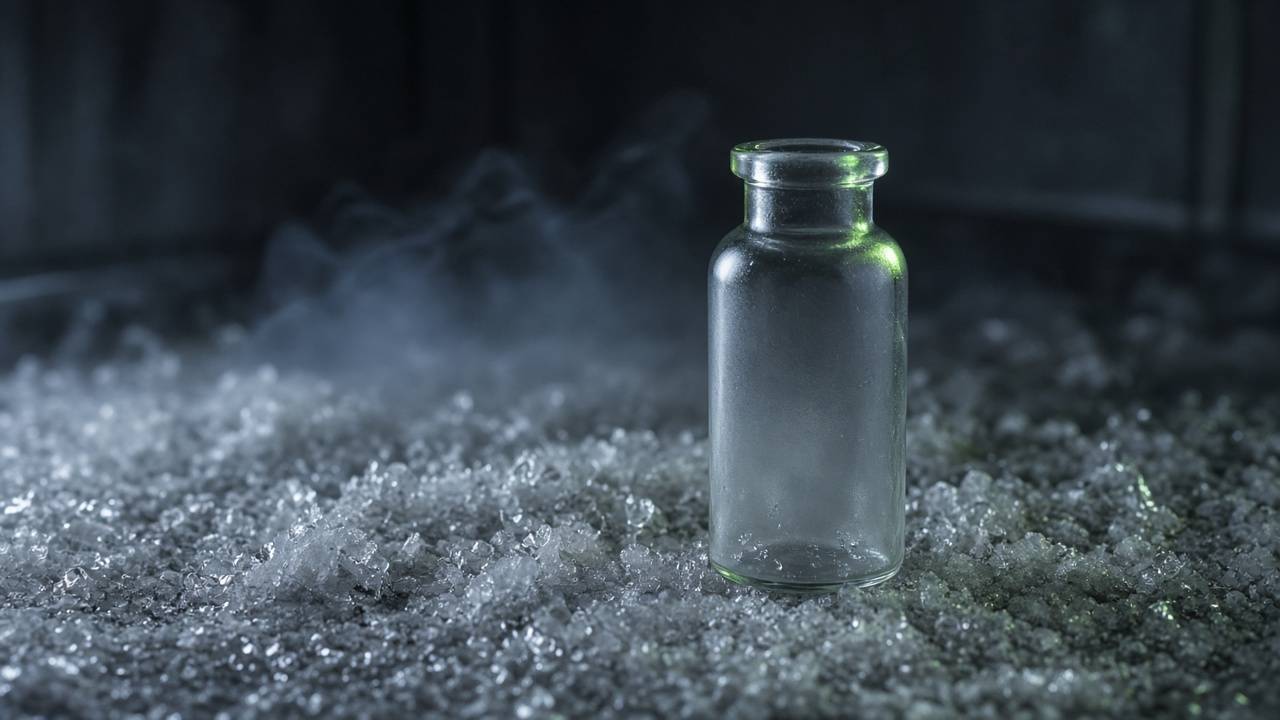
The diluent vial
Bacteriostatic water is stored unopened at controlled room temperature (20–25 °C per the Hospira label). Once punctured, CDC's multi-dose vial rule applies: date it, discard within 28 days unless the manufacturer says otherwise, never past expiry. Details: bacteriostatic water after opening.
Frequently asked questions
How should lyophilized peptides be stored?
Bachem recommends storing lyophilized peptides below −15 °C, with lower temperatures (−50 °C or lower) preferred for long-term storage, protected from moisture. Many can be shipped at room temperature and kept in a refrigerator at about 4 °C for short-term use.
How long does a reconstituted peptide last?
There is no single answer; it depends on the sequence. Bachem advises against long-term storage of peptides in solution, notes that frozen solutions may be kept for a few weeks, and recommends aliquoting and freezing below −15 °C. Peptides containing Asn, Gln, Cys, Met or Trp are less stable in solution. Use the compound documentation where it exists.
Why let a vial warm up before opening it?
Peptides tend to be hygroscopic. Bachem advises letting the container reach room temperature in a desiccator before opening so moisture does not condense on the cold powder, which lowers peptide content and can reduce stability.
Should reconstituted vials be frozen and thawed repeatedly?
Repeated freeze–thaw cycles are generally avoided, which is why aliquoting (splitting into single-use portions before freezing) is recommended for solutions that must be stored.
How long is an opened vial of bacteriostatic water good for?
CDC guidance: date the multi-dose vial when it is first opened and discard it within 28 days unless the manufacturer specifies otherwise, never beyond the expiration date.
Sources
- Handling and Storage Guidelines for Peptides
- Preventing Unsafe Injection Practices (multi-dose vial beyond-use dating)
- Bacteriostatic Water for Injection, USP (Hospira) — prescribing label
Links checked 2026-10-19.